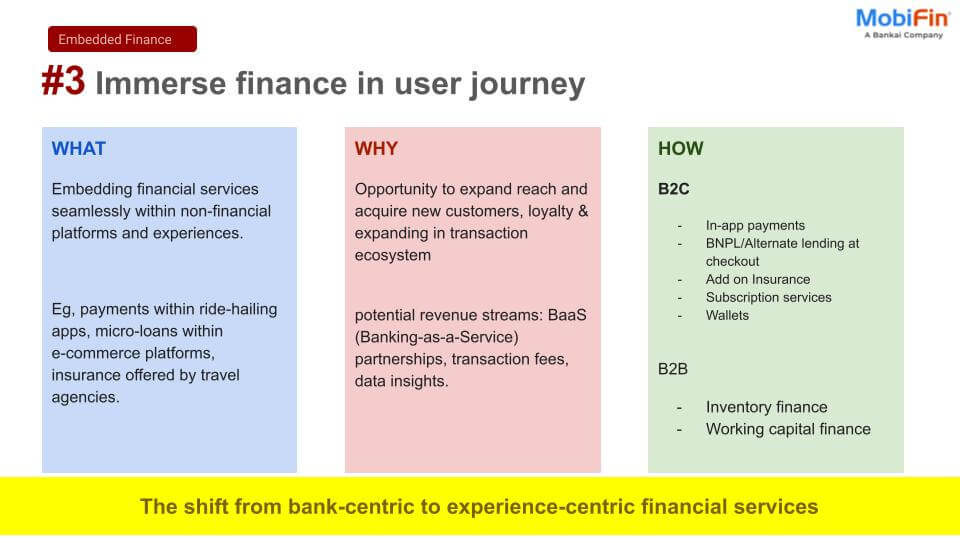







The Republic of The Gambia, with a population of approximately 2.76 million, stands at a striking digital crossroads. In early 2024, cellular mobile connections reached 107.5% of the total population. This saturation suggests the infrastructure for mass digital engagement is firmly established. However, a disconnect remains as only 38% of adults (aged 15+) had a formal bank or mobile money account in 2024.
This gap between connectivity and financial participation defines The Gambia’s digital paradox.
This disparity is the core challenge—and the multi-billion-dollar opportunity—for the nation’s FinTech sector. To address this, the Central Bank of The Gambia (CBG) launched its National Financial Inclusion Strategy with a goal of bringing 70% of adults into the formal financial sector by 2025.
Infrastructure and the USSD reality
Despite high connectivity, the quality of advanced digital services is limited by Internet penetration, which stood at 54.2% at the start of 2024. High costs and low-quality broadband aggravate a digital divide that forces many Gambians to depend on Unstructured Supplementary Service Data (USSD) rather than data-intensive apps.
This reliance is not transitional, but it is structural. Any inclusion strategy that assumes app-first adoption risks excluding a large portion of the population.
Socio-economic factors further reinforce this reliance. Approximately 43% of adults attribute a lack of information and education as a primary barrier to adopting digital financial services. As a result, success depends on simple technology and trusted physical networks that can provide face-to-face education to build grassroots confidence.
Remittances: A strategic growth engine
International remittances are a vital economic lifeline, contributing over 20% of the national GDP. In 2021 alone, inflows were projected to reach approximately $900 million. Despite this volume, about 70% of adults still count on informal channels to receive these funds.
In addition to cost sensitivity, this dependence reflects gaps in accessibility, trust, and last-mile payout infrastructure.
Digitizing these flows is a major opportunity for providers. The QMoney-RIA partnership lets Gambians receive transfers directly into mobile wallets, potentially reducing transfer costs by up to 30%. However, fund retention remains a challenge, as cash withdrawals are common immediately following the receipt of digital funds.
This behavior signals a system-level design gap, where limited digital use cases and merchant acceptance discourage in-wallet usage.
Interoperability: The GamSwitch evolution
A major structural obstacle is the “interoperability deficit,” where siloed provider networks hinder seamless transfers. Without interoperability, financial inclusion scales access but fails to scale usage. GamSwitch, the national payment switch, is the foundational infrastructure tasked with resolving this.
In February 2024, the CBG and GamSwitch held a high-level summit to align the strategic vision for the nation’s payment processing. Moreover, in late 2024, technical training was conducted in Banjul on Mojaloop, an open-source inclusive instant payment system. The release of Mojaloop v17 supports cross-border payments and global ISO 20022 standards, paving the way for a fully interconnected digital economy. For The Gambia, this marks a shift from closed-loop payments toward a shared national transaction fabric.
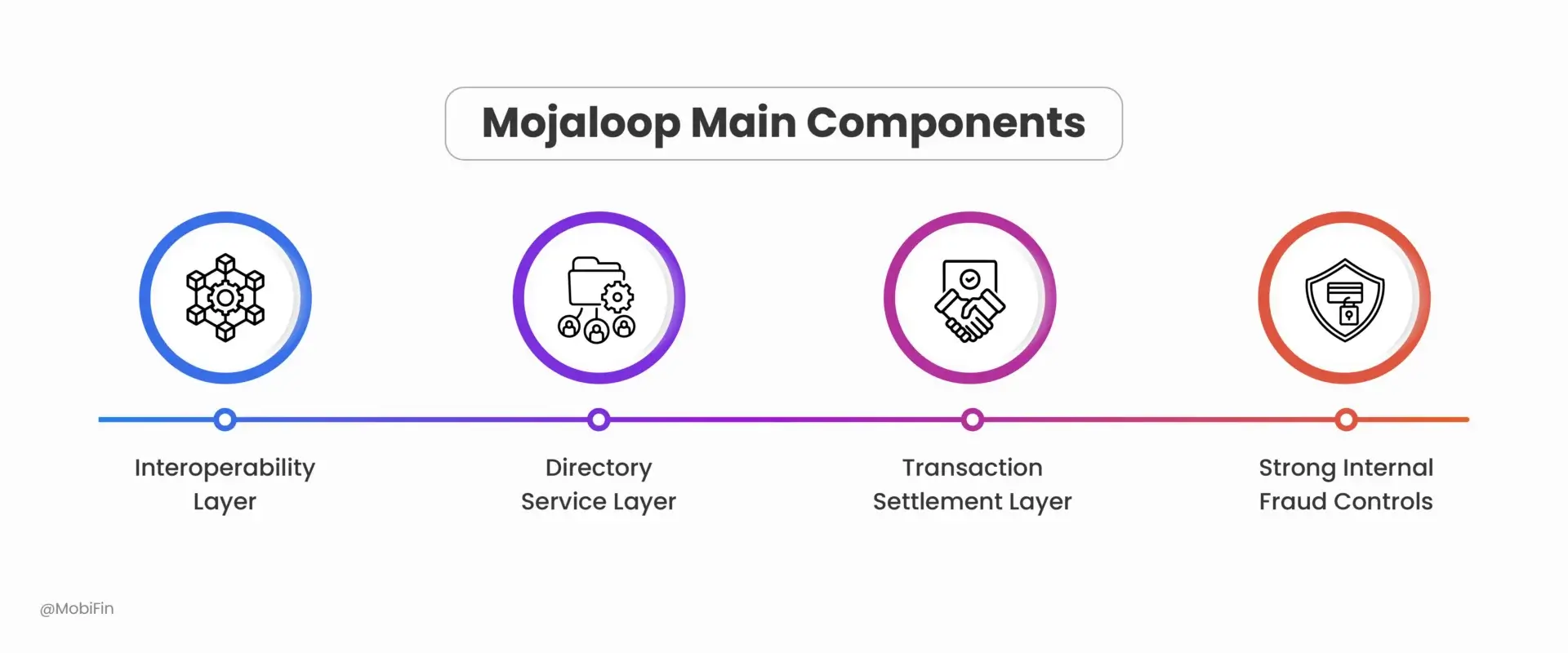
Source: One Loop For All: Making Digital Financial Services More Affordable and Accessible – Mojaloop
To reach the 2025 inclusion goal, the sector must continue pivoting toward such FinTech innovation in the Gambia while maintaining robust USSD functionality for rural users.
Extending inclusion beyond access
Although access to financial infrastructure is a critical first step, inclusion becomes fruitful only when digital financial services are actively used in daily life. In The Gambia, many new users remain “digitally dormant,” opening accounts primarily to receive funds rather than to store, spend, or transact digitally. This gap between access and usage represents the next frontier of financial inclusion.
To address this concern, providers must design products that fit everyday economic behavior. Payments for transport, school fees, utilities, market purchases, and micro-merchants must be seamlessly possible across both digital and assisted channels. When digital wallets resolve immediate, recurring problems, they shift from optional tools to essential services.
The role of agency banking solution in sustaining adoption
Agency banking is one of the most effective mechanisms to bridge trust and literacy gaps in The Gambia’s financial ecosystem. Agents not only facilitate transactions but also provide problem resolution, education, and reassurance at the community level. In rural as well as semi-urban areas, agents often serve as the first point of contact for formal financial services.
In practice, agent networks form the distribution backbone of inclusion, not a supplementary channel.
Well-managed agent networks can reduce drop-offs following the onboarding process. By offering cash-in, cash-out, balance inquiries, dispute handling, and basic financial guidance, agents anchor digital finance in physical reality. This hybrid model ensures that inclusion is not dependent on smartphone ownership or consistent Internet access, reinforcing the importance of USSD-based services alongside app-based platforms.
Government payments enabling digital usage
Government-to-person (G2P) payments are an effective lever to augment digital adoption. Social benefits, salary payments, and development program disbursements routed through digital channels can create immediate scale and trust. When recipients experience reliable, timely digital payments backed by government institutions, confidence in formal financial systems increases rapidly. G2P programs act as a demand-side accelerator for digital finance when paired with interoperable payment rails.
However, to prevent immediate cash-outs, G2P programs must be paired with usable digital ecosystems. Merchant acceptance, bill payment options, and affordable transaction pricing are important to keep funds within the digital loop. Without these elements, digital disbursements risk becoming temporary conduits rather than drivers of behavioral change.
Operational resilience as a trust multiplier
With a rise in transaction volumes, operational resilience becomes a defining factor in user confidence. Failed transactions, delayed settlements, or unresolved disputes can erode trust far faster than marketing can rebuild it. Platforms operating in The Gambia must focus on clear incident-response processes, uptime, real-time reconciliation, and liquidity monitoring. For regulators and ecosystem stakeholders, operational discipline is as important as innovation. A stable, predictable digital financial system reinforces consumer protection, supports economic activity, and encourages long-term participation.
Looking beyond 2025
Reaching the Central Bank of The Gambia’s 70% inclusion target is an important milestone, but it should be viewed as a foundation rather than an endpoint. The next phase of growth will depend on interoperability maturity, ecosystem depth, and the ability to turn access into sustained digital behavior.
The amalgamation of inclusive regulation, interoperable infrastructure, agent-led distribution, and resilient operations will help The Gambia move beyond the digital paradox. It will transform widespread connectivity into a fully functioning, inclusive digital financial ecosystem.
Looking forward to learn more? Book a demo >>